
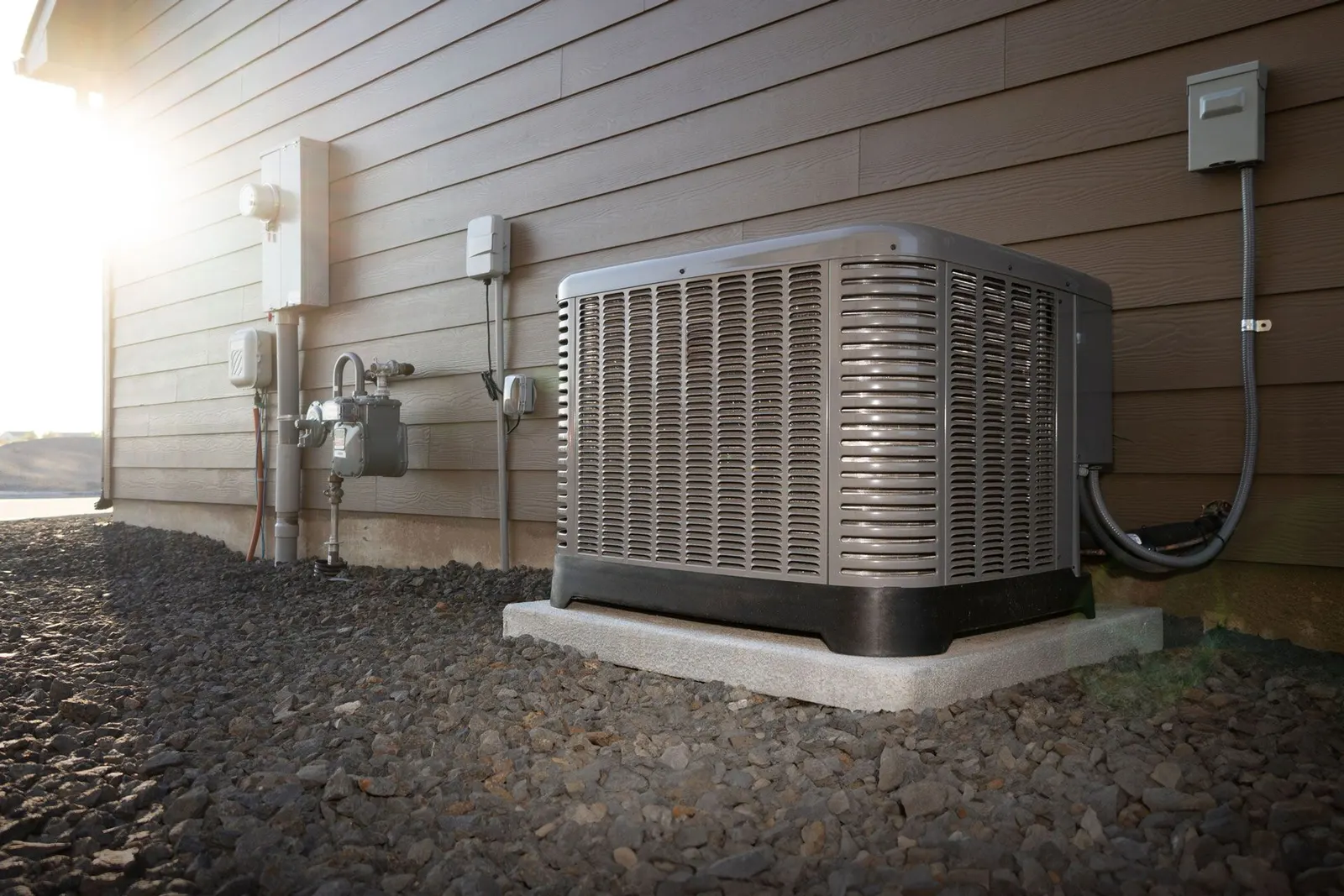
AC Repair & Service in Southern Illinois
Is your AC running constantly but barely cooling your home? We diagnose the root cause and restore dependable comfort you can count on.
Is Your AC Blowing Warm Air, Short-Cycling Every Few Minutes, or Leaving Your House Sticky Even When It's Running?
Is your air conditioner running but not cooling, cycling on and off constantly, or leaving your Southern Illinois home feeling more like a sauna than the 68 degrees your thermostat claims? These aren't minor annoyances you can ignore — they're signs that something inside your system has failed, and running it in this condition often makes the problem worse and more expensive. Smith Heating, Air & Sheet Metal is ready to diagnose what's broken and get your cooling back on track today.
Warning Signs Your AC Needs Professional Repair
Warm Air From the Vents When the System's Running
You set the thermostat to cool, you hear the system kick on, air is definitely moving through the vents — but it's not cold. Sometimes it's barely cooler than the air already in the room, sometimes it's actually warm, and the house temperature just keeps creeping up no matter how long you let it run. Either your compressor isn't engaging, you've lost refrigerant charge through a leak, or the reversing valve is stuck in heating mode — all three produce the same symptom but require completely different fixes.
System Cycles On and Off Every Few Minutes
The AC kicks on, runs for maybe three to five minutes, shuts off, then starts again a few minutes later — over and over, all day long. You hear the outdoor unit starting and stopping constantly, and the house never quite gets to the temperature you set. This short cycling could be a refrigerant charge issue causing the compressor to overheat, a failing capacitor that can't keep the compressor running consistently, or a clogged filter causing the evaporator coil to freeze up and trigger the limit switch.
Ice Buildup on the Refrigerant Lines or Indoor Coil
You see frost or ice on the copper lines running into the house, or if you pull the panel off the indoor unit, the evaporator coil looks like the inside of a freezer. Sometimes you notice water dripping from the indoor unit or pooling around the furnace, because that ice eventually melts when the system shuts off. The evaporator coil is getting too cold — either because there's not enough airflow across it, not enough refrigerant in the system, or the metering device is stuck and dumping liquid refrigerant into the coil too fast.
Strange Noises — Grinding, Squealing, Banging, or Hissing
The system used to run quietly, now there's a sound you can't ignore. Grinding or squealing from the outdoor unit, banging when it starts up, hissing near the refrigerant lines, or a loud hum that rattles the windows. Grinding usually means a motor bearing is failing, squealing is often a belt on older units or a failing motor mount, banging at startup can be a failing compressor or loose fan blade, and hissing is refrigerant escaping through an active leak.
Humidity Feels High Even When the AC is Running
The air temperature might be close to what you set, but the house feels clammy, sticky, uncomfortable. Windows fog up, towels don't dry, the air just feels heavy. An AC system removes humidity as a byproduct of cooling, and if the system is short-cycling, oversized for the space, or has airflow problems, you get cooling without dehumidification — which in Southern Illinois summer humidity means you're only getting half the comfort you're paying for.
Electric Bills Jumped Without Explanation
Your summer electric bills used to run $150-$180, now you're seeing $250-$300 and nothing else in your routine has changed. The AC seems to be running all the time, the house is barely comfortable, and you're paying significantly more for worse performance. An AC system that's low on refrigerant, has a failing compressor, or is fighting against restricted airflow will run longer cycles and pull more amperage trying to achieve the temperature you've set.
What Actually Breaks and Why
Refrigerant Leaks — The Invisible Problem
Refrigerant doesn't "run out" like gas in a car — it's a closed-loop system that should never lose charge. When we find low refrigerant, there's a leak somewhere: a vibration crack in a brazed joint, a pinhole in the evaporator coil from formicary corrosion, a Schrader valve leaking at the service port, or a condenser coil that took hail damage or got punctured by a weed trimmer. In Southern Illinois, where outdoor units sit in yards with high grass, trimmer strikes are more common than homeowners expect.
We use electronic leak detectors, UV dye, and soap bubbles to find the leak — sometimes it's obvious, sometimes it takes an hour of methodical checking. Once located, we repair the leak, vacuum the system down to remove any air and moisture, and recharge it to the manufacturer's spec. If the evaporator coil is leaking and it's buried in the air handler, the repair cost often pushes toward replacement territory, and we'll walk you through that trade-off honestly.
Failed Capacitors — The Part That Fails Most Often
The capacitor is a small cylindrical component that gives the compressor and fan motors the electrical "kick" they need to start and keep running. Capacitors are wear items — they're rated for a certain number of cycles and a certain temperature range, and in an AC system that starts and stops thousands of times per summer in 90-100°F heat, they degrade. A weak capacitor makes the motor work harder, which makes the capacitor heat up more, which accelerates the failure.
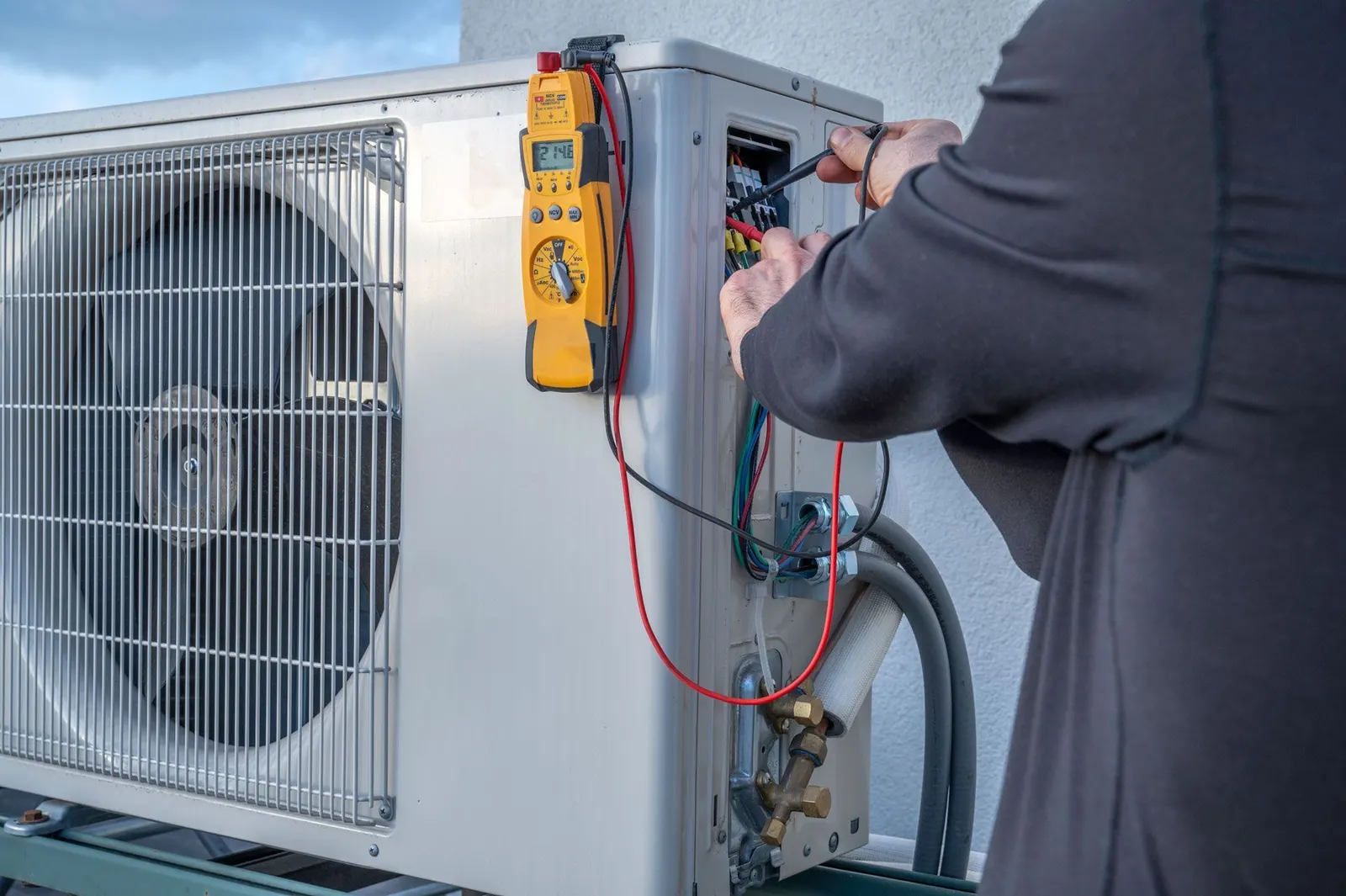
We test the capacitor with a multimeter to check its microfarad rating against spec — if it's more than 10% off, it gets replaced. The part costs $15-$40 depending on size, the labor is fifteen minutes, and the system is back to normal operation immediately. If the capacitor failed because the motor is drawing too much current, we'll catch that during testing and let you know what's coming next.
Contactor Failure — Why the Outdoor Unit Won't Start
The contactor is an electrical relay that closes when the thermostat calls for cooling, sending power to the compressor and condenser fan. It's essentially a switch that opens and closes thousands of times per season, and the contacts inside can pit, corrode, or weld themselves together from electrical arcing. When contactors fail, you'll either get no outdoor unit response or the outdoor unit won't shut off.
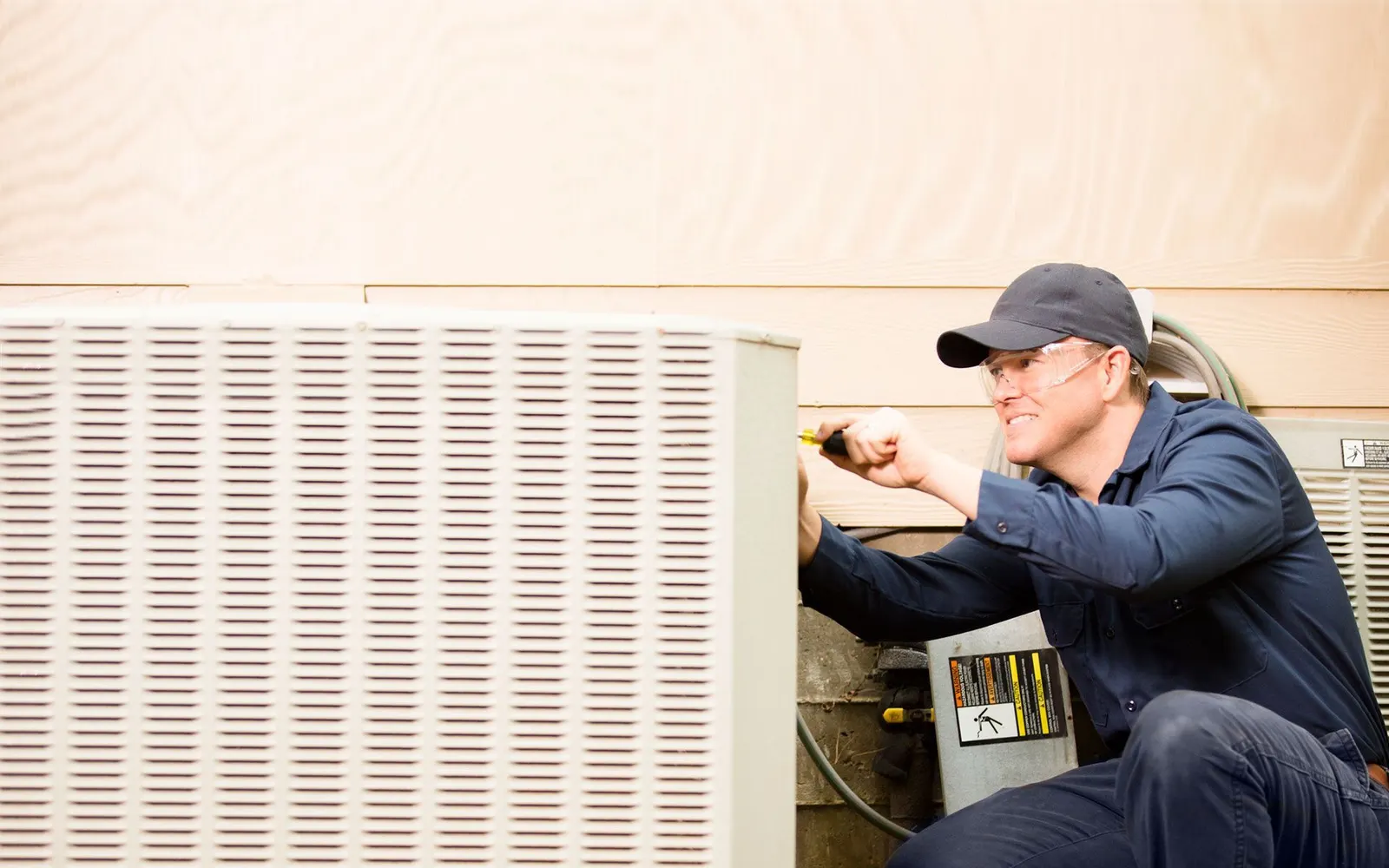
We inspect the contactor for pitting or damage, test it with a meter, and replace it if it's failed or marginal. It's a bolt-in part that takes twenty minutes to swap. If we find a failed contactor, we also check what caused the excessive arcing — sometimes it's a failing compressor drawing too much amperage, sometimes it's just age and cycle count.
Blower Motor or Capacitor Issues — No Air Movement
The blower motor inside your air handler is what moves air through the ductwork and across the evaporator coil. If the blower motor fails, the blower capacitor fails, or the motor's internal thermal overload trips, you'll have an outdoor unit that runs but no air coming from the vents. Blower motors fail from bearing wear, overheating caused by restricted airflow from dirty filters, or age.
We test the motor, test the capacitor, check the amp draw, and verify the control board is sending power. If it's a capacitor, that's a quick swap. If the motor is seized or the windings are open, we replace the motor — which involves pulling the blower assembly, mounting the new motor, and reassembling everything.
Dirty or Blocked Coils — The Slow Efficiency Killer
Both the evaporator coil inside and condenser coil outside need clean surfaces to transfer heat effectively. The outdoor coil gets clogged with cottonwood seeds, grass clippings, dust, and pollen — especially in rural areas where fields and lawns surround most homes. The indoor coil accumulates dust if the filter isn't changed regularly. A blocked coil can't reject heat, so the system runs longer, works harder, and cools less effectively.
We clean coils with coil cleaner and a pressure washer for outdoor units or coil cleaner and a soft brush for the more delicate indoor coil. If the outdoor coil is badly bent or damaged, we'll straighten fins with a fin comb. A clean coil can restore 20-30% of lost capacity and drop your operating cost immediately.
What Happens When We Show Up
When you call Smith Heating, Air & Sheet Metal for an AC repair, you're getting a technician who's seen the failure mode you're describing a hundred times across the region. We're not showing up to sell you a new system; we're showing up to diagnose what's broken and fix it if the repair makes sense.
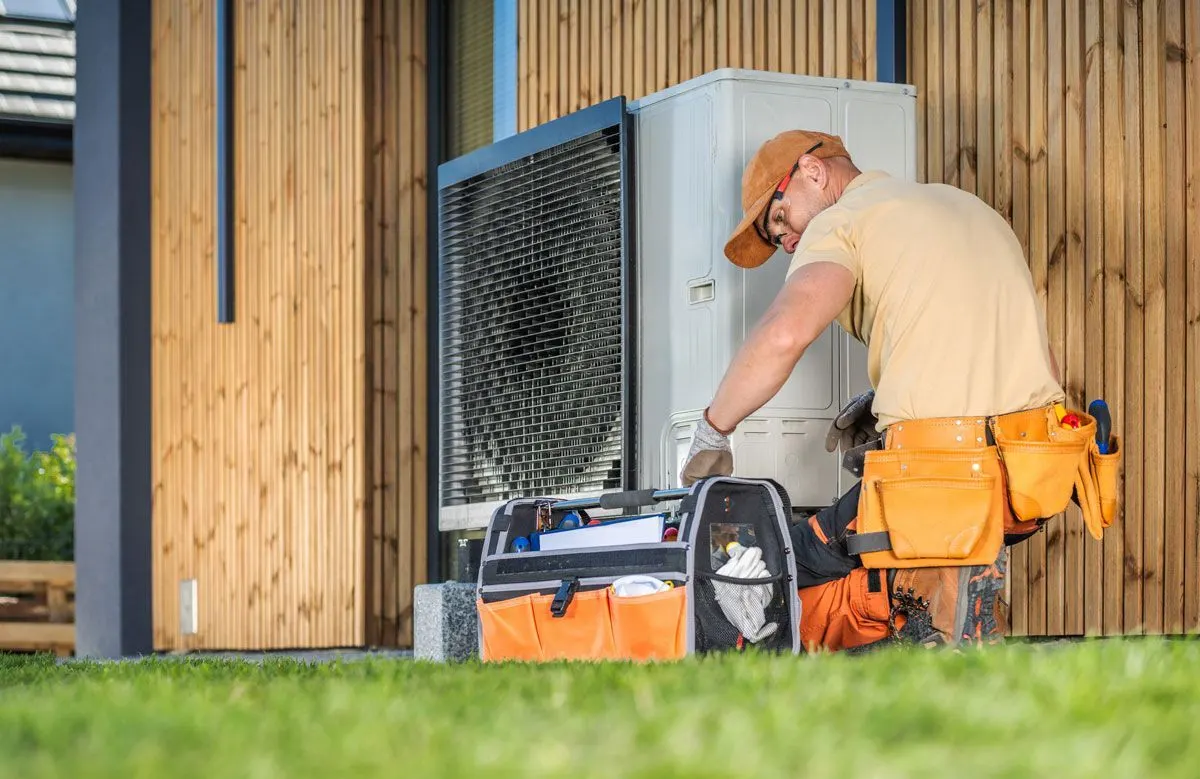
The tech will ask you to walk through what you've noticed — when the problem started, what it sounds like, smells like, feels like, what you've already tried. That conversation isn't small talk; it's diagnostic. We'll verify the thermostat is calling for cooling, check the indoor and outdoor units are both responding, and listen to how the system sounds during startup and operation. We're checking amp draw on the compressor, fan motor, and blower motor with a clamp meter — if something's pulling too many amps or too few, that's a diagnostic clue before we even pull a panel.
We'll check the refrigerant pressures, measure the temperature split across the evaporator coil, and inspect airflow at the vents and the coil itself. Low airflow or wrong pressures point us toward specific components. Once we've narrowed it down, we test the suspected component — capacitor with a meter, contactor for pitting or resistance, motor windings for continuity, coils for blockage. We'll show you the failed part when possible so you understand what broke and why.
If it's a straightforward fix — capacitor, contactor, coil cleaning — we'll quote it, complete the repair, and test the system before we leave. If it's a bigger issue — compressor failure, major refrigerant leak, multiple failing components on an old system — we'll give you the repair cost and the context so you can make an informed decision. After the repair, we run the system through a full cycle, recheck pressures and temperatures, verify amp draw is normal, and make sure you're getting cold air at the vents and the system is hitting the target temperature.
AC Repair & Service Coverage Across Southern Illinois
We serve homeowners throughout the region, and we know the differences between older homes with original ductwork and newer builds with builder-grade systems that have been pushed hard for years.
Southeastern Missouri: Perryville, MO
Related Air Conditioning Services
If your system is running but struggling, a Maintenance & Tune-Up visit can catch small problems before they become expensive failures — we clean coils, test components, check refrigerant, and verify everything's operating within spec. If you're looking at a major repair cost on an old system, it's worth understanding your options for AC Installation & Replacement — sometimes the math tips toward replacement when you factor in efficiency gains and the likelihood of another breakdown next season.
Let's Get Your AC Running Right
You didn't call because you wanted to spend money on HVAC repairs — you called because it's hot, the system isn't working, and you need it fixed. We get that. Smith Heating, Air & Sheet Metal has been handling these exact calls for years, and we know the difference between a repair that makes sense and one that doesn't.
If your AC is blowing warm air, cycling constantly, making noises it didn't make last week, or just not keeping up the way it used to, we'll figure out what's broken and give you a straight answer about what it takes to fix it. Call us or visit our contact page and let's get your system back to doing its job.
Ready for Expert AC Repair & Service in Southern Illinois?
Ask Smith for an estimate or service details in Steeleville, IL.